Every integrator knows the first connection is only the beginning. What matters next is how the data holds up, how it performs under load, across protocols, and through every firmware update or network change.
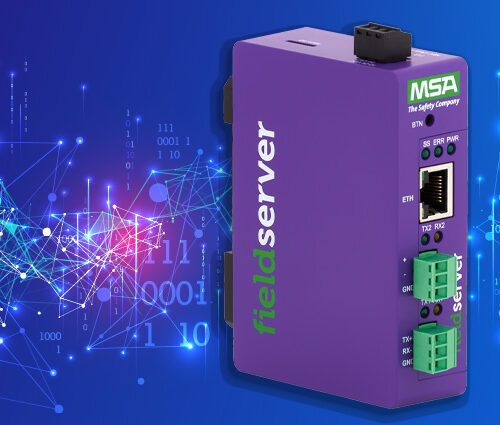
Integration solutions such as MSA FieldServer gateways are built for that next phase, where integration isn’t just established, but sustained.
This article looks at what happens after integration is complete and data is in motion. It explores how performance is maintained, why ongoing visibility matters as systems expand, and how gateways help turn connected operations into a foundation for long-term reliability and insight.
In connected operations, integration success is measured less by how quickly devices connect and more by how consistently data performs once they do. As organizations link more systems across buildings, plants, and platforms, maintaining reliable performance over time has become the real differentiator.
Integration’s Next Test: Sustaining Performance
According to Gartner, only 48 percent of digital initiatives meet or exceed their intended business outcomes, a gap often linked to ongoing data quality and governance challenges.1
That finding reinforces a growing industry truth: the challenge is no longer establishing communication between systems but sustaining the precision and dependability of that data once the network is live.
Industry Perspective: From Data Collection to Data Stewardship
The rise of connected systems has shifted responsibility from gathering information to managing it. Data stewardship is now as critical as network design.
McKinsey reports that companies pursuing next-generation data products often need to rethink their data architecture and governance to ensure reliability at scale.2
This reinforces a simple truth: when integration grows, control matters more than speed. The organizations that thrive are those that treat data performance as an operational asset rather than an IT function.
Why Data Performance Slips Over Time
Even in well-designed systems, data performance rarely stays constant. As devices evolve and networks grow, small inconsistencies begin to surface, including issues too minor to trigger alarms but significant enough to affect accuracy over time.
Common causes include:
- System changes without remapping. Replacing a controller, adding a sensor, or modifying a register map without updating configurations can introduce silent data gaps.
- Version drift. Firmware updates, protocol revisions, or device swaps can alter how data is formatted or transmitted, leading to mismatched values or timeouts.
- Scaling stress. As more devices connect, network load and polling intervals shift, sometimes exceeding what legacy systems were designed to handle.
Each of these subtle shifts can distort the operational data, gradually eroding the reliability of analytics, alarms, and automation.
Sustaining performance requires ongoing visibility into changes in data flow and timing, along with tools to correct them before they affect system reliability.
Keeping Data Performing: The 3 Essentials
Maintaining reliable data flow is not a one-time task but a continuous cycle of observation and adjustment.
The most resilient integrations share three qualities that keep performance steady as systems change. Together, they create a practical framework for sustaining data quality across every layer of the network.
1. Validation
Reliable systems begin with verified data. Validation ensures that values are complete, accurate, and updating within expected ranges. When data integrity is confirmed at the source, every downstream system, from dashboards to analytics, operates on trustworthy information.
FieldServer gateways put this principle into practice through built-in validation tools that confirm device communication and data accuracy in real time.
2. Visibility
Ongoing visibility allows operators to see how data moves through the network as it happens. Monitoring flow rates, device responsiveness, and communication latency makes it possible to detect irregularities early and resolve them before they affect operations.
With FieldServer gateways, teams gain continuous visibility into live performance metrics and diagnostics, making it easier to spot and address issues before they escalate.
3. Adjustment
No system remains static. As devices, firmware, and communication paths evolve, integration settings must evolve, too. Regular fine-tuning of mappings, polling intervals, and point configurations keep performance aligned with current operating conditions.
FieldServer gateways make these adjustments simple with flexible configuration tools that streamline updates and help maintain performance as networks expand.
Integration Intelligence: The Next Advantage
Now that connectivity is a given, the next differentiator lies in how well systems interpret and act on the data they collect. The conversation has moved beyond linking devices to managing insight.
Industry leaders are moving toward what some call integration intelligence, a model that blends automation, monitoring, and analytics to make data management self-correcting.
FieldServer gateways already reflect this evolution through automated validation, remote diagnostics, and support for IT-friendly protocols that bridge operations and enterprise systems.
As artificial intelligence and machine learning mature, this foundation will help integrators anticipate problems instead of reacting to them and turn operational data into strategic insight.
Integration That Lasts
The work of integration does not end when data begins to flow. It continues in the daily precision that keeps that data accurate, visible, and aligned with evolving systems. As networks grow more complex, the measure of success shifts from simple connectivity to sustained performance where every device, protocol, and platform contributes to a reliable flow of information.
FieldServer gateways were built for this ongoing phase of integration. They help transform data exchange into a managed process, one that remains stable as technology, infrastructure, and requirements change. By combining validation, visibility, and adjustment within a single, adaptable platform, FieldServer gateways make it possible to maintain performance, not just achieve it.
In the end, lasting integration is not about connecting more. It’s about keeping what’s connected performing reliably over time.
Built for Change
Industrial networks rarely stand still. Equipment is replaced, protocols evolve, and new systems are added to meet operational goals. Each change introduces complexity, but it also creates an opportunity to strengthen integration.
FieldServer gateways are built for this reality. With a flexible architecture that supports protocol updates, system expansions, and configuration changes without disrupting performance, this kind of adaptability allows organizations to:
- Modernize at their own pace
- Preserve existing investments
- Keep data performing reliably as infrastructure advances
Ready to keep data performing at its best? Contact a FieldServer expert to learn how FieldServer gateways help sustain reliable data flow across connected systems.
Sources:
1. Gartner, Inc. Gartner Survey Reveals That Only 48 Percent of Digital Initiatives Meet or Exceed Their Business Outcome Targets. https://www.gartner.com/en/newsroom/press-releases/2024-10-22-gartner-survey-reveals-that-only-48-percent-of-digital-initiatives-meet-or-exceed-their-business-outcome-targets.
2. McKinsey & Company. Revisiting data architecture for next-gen data products. https://www.mckinsey.com/capabilities/tech-and-ai/our-insights/tech-forward/revisiting-data-architecture-for-next-gen-data-products?utm_source=chatgpt.com.
Recommended for You