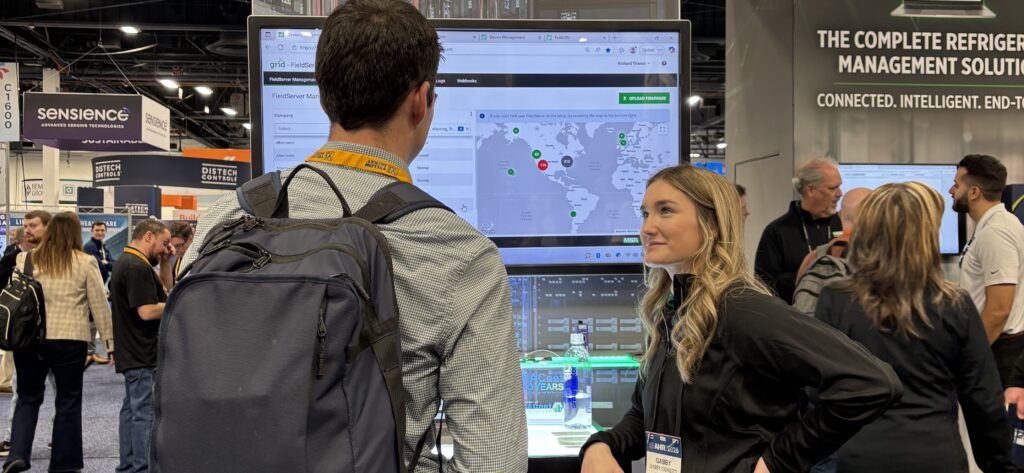
At the AHR Expo 2026, the conversations were as expected: lively, nonstop, and plentiful. They were also specific, technical, and operational. We heard less “What’s possible?” and more “Will this install cleanly and perform as expected?”
That shift says something important about where HVAC-R integration is headed. Integration is no longer about simply connecting devices. It’s about helping reduce friction from design through deployment while supporting the data appetite of AI analytical tools.
After three days of great conversation, here are a few themes that were hard to miss.
Remote Monitoring Is the Baseline
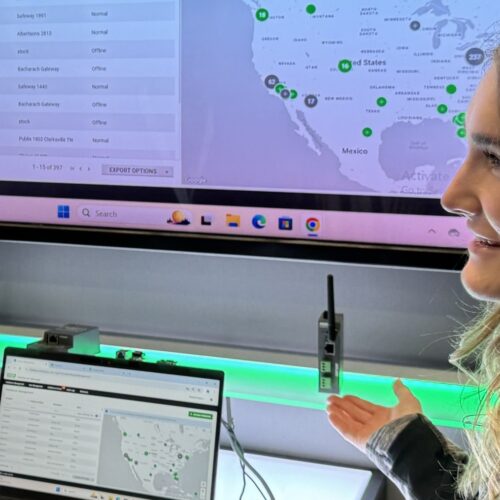
Remote monitoring came up repeatedly. Engineers indicated that they increasingly expect to reach devices located behind building firewalls without requesting special IT exceptions or building complex workarounds. Once equipment is installed, they want to maintain visibility at the network boundary.
Encrypted communication and the ability to support dependable remote connectivity are no longer advanced capabilities. They’re becoming part of the standard requirement set, especially as HVAC systems connect more closely with enterprise networks.
The expectation may continue to influence how closely building automation and enterprise IT standards converge. Gateways increasingly need to support secure communication standards and provide reliable remote access options that can align with IT security policies, rather than work around them.
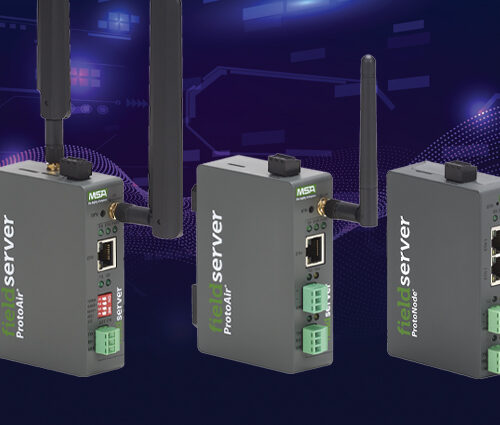
Across the FieldServer gateway lineup, that shift has meant treating secure protocol translation and encrypted communication support as key design considerations, not optional enhancements.
Embedded Integration Impacts Design Decisions
The topic of embedded deployment came up frequently. More manufacturers are considering embedding protocols directly inside their equipment rather than relying on external gateways, and that changes how integration is approached at the beginning of a design project.
When a gateway lives inside the unit, design benefits become quickly evident:
- Products that “check all the boxes” for meeting project requirements
- A “future proof” platform for future protocol and feature upgrades
- Smaller, more compact designs
- Lower hardware costs
More manufacturers are seeing the long-term benefits of designing in protocols and interfaces.
Commissioning Friction Can Add Up
Through the AHR Expo, commissioning came up in more than a few conversations. Not in theory, but in hours on-site and in time spent troubleshooting.
Small setup details can slow an installation more than expected. Default protocol roles, such as follower vs. master configurations in boiler applications, startup configuration behavior, and manual adjustments during deployment may affect how quickly a system becomes operational.
When installers need to pause and reconfigure devices before they function correctly, project timelines may stretch and risk could increase. Those delays are rarely dramatic, but they can add up.
Clear product identification in the field also matters, especially when multiple hardware generations may be installed side by side.
Reducing friction may require thoughtful defaults, predictable behavior, and fewer manual intervention points. Across the industry, gateway design is moving toward simpler configuration and more intuitive setup processes.
Within the FieldServer portfolio, integrators can use streamlined configuration workflows and the removal of legacy hardware as part of that broader direction.
Integrators might want to keep in mind that faster commissioning isn’t just a convenience. It may help influence cost, installer confidence, and long-term system reliability.
Data Centers Impact HVAC Integration Standards
Data centers were central to many discussions about network design, uptime expectations, and secure connectivity.
As digital infrastructure expands, HVAC systems supporting data centers face higher performance requirements. Environmental control must be precise, downtime is often tightly constrained, and network architecture is often tightly managed by IT teams.
Cooling systems in these environments are expected to integrate cleanly with building automation platforms, enterprise monitoring systems, and secure corporate networks.
That may require encrypted communication, dependable protocol translation, and architecture designed to align with IT security policies.
Those expectations don’t stay confined to data centers. As design standards evolve in mission-critical environments, they tend to influence broader HVAC integration across commercial and industrial applications.
FieldServer gateways are often deployed in environments where secure communication standards and enterprise-ready connectivity are important considerations.
Network Technologies Are Evolving
Questions about newer Ethernet communication methods came up throughout the show, particularly technologies designed to carry both power and data over simplified wiring. Questions also came up around emerging standards, such as 10BASE-T1L single-pair Ethernet, especially for longer runs and space-constrained installations.
Engineers are evaluating how these emerging approaches fit into existing building automation architectures. The goal isn’t novelty. It’s efficiency, distance flexibility, and long-term viability.
As physical layer technologies evolve, integration decisions become more interconnected with hardware design, protocol support, and network topology increasingly considered together.
Protocol translation remains essential, but so does adaptability at the network level. Future-ready integration may hinge less on chasing every new technology and more on designing architecture that can flex as the environment adjusts.
Support Is Part of the Solution
Some of the most valuable discussions at AHR were not about new features at all. They centered on deployment realities, such as grounding considerations, communication troubleshooting, packaging efficiency, and clear support processes.
In complex environments, long-term performance may depend as much on documentation, responsiveness, and technical depth as it does on hardware specifications.
What AHR 2026 Confirmed
Across equipment rooms, commercial buildings, and data center environments, expectations are aligning. Engineers are looking for remote monitoring, embedded-ready hardware, simplified commissioning, adaptable network architecture, and long-term support that extends beyond installation.
The industry has largely solved connectivity. The new challenge is integration under pressure.
If you’re evaluating how these trends affect your HVAC or building automation projects, contact us to continue the conversation.
Recommended for You