Integration rarely fails because of one big error. More often, it’s the small, easily overlooked details that can cause the biggest setback: a missing punctuation mark in a password, a duplicated network number, or a blank cell in a configuration file.
In building automation, industrial control, and energy management projects, these minor oversights can trigger hours (or days) of troubleshooting, delays, and costly rework.
Drawing on years of field experience supporting MSA FieldServer gateways and connected solutions, these insights highlight the practical habits and process details that often make the difference between a smooth startup and a stalled project.
Successful integration isn’t just about technical skill. It’s about consistency, foresight, and an eye for the details that quietly determine whether a system performs as designed.
The following five missteps represent some of the most common and avoidable integration issues seen across the field today.
1. Overlooking the Basics: Access and Network Alignment
One of the most frequent causes of early-stage frustration involves something deceptively simple: the inability to connect or log in. In many cases, the problem has nothing to do with hardware or software. It comes down to basic access or network setup.
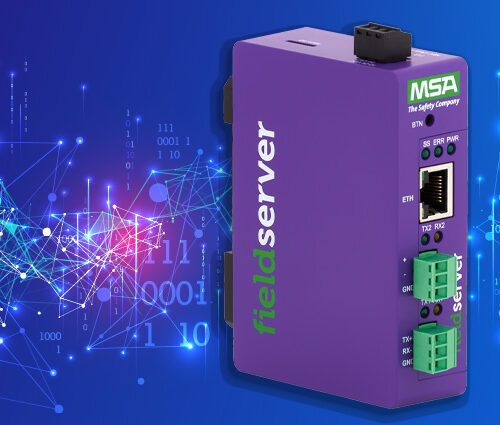
Most gateways, such as FieldServer QuickServer and EZ Gateway, ship with a 10-character default password printed directly on the device label. That password often includes punctuation that can be easy to miss when entered manually. Omitting even one character can prevent access to the web interface.
A reliable workaround is to scan the QR code on the device label and copy-and-paste the password into the login page. This approach eliminates transcription errors and ensures that every character is included.
Connection failures also can result from IP conflicts. Many gateways use a static IP address by default, while laptops are frequently configured to obtain addresses automatically. Without setting the computer to a static IP address on the same subnet, the browser simply cannot reach the device graphical user interface (GUI). Although startup guides include network setup steps, many readers skim past them, only to face connection issues later.
Best Practice:
Before assuming the device is unresponsive, confirm that the laptop and gateway share the same subnet, then use the QR code to copy and paste the password into the login. Small steps like these can prevent unnecessary troubleshooting at the outset.
2. Assigning Conflicting Virtual Network Numbers
Misaligned network numbering is one of the most common causes of failed BACnet discovery. Each network segment requires a unique network number, and if two networks share the same one, they can’t communicate or be discovered.
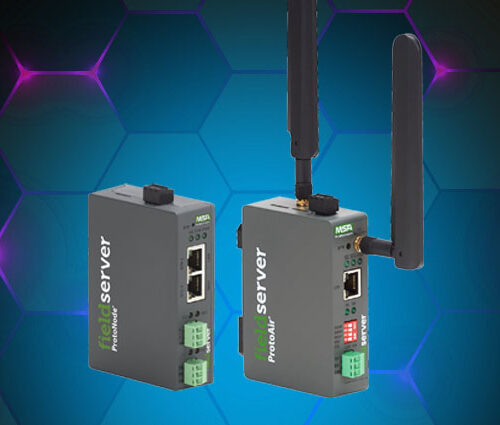
Conflicts most often occur when a gateway or router, such as FieldServer ProtoNode or BACnet Router, creates a virtual BACnet network but is assigned the same number as the Building Management System (BMS). The devices effectively occupy the same “address space,” so messages never reach their destination.
To prevent this, integrators can follow these simple rules:
- Make sure every virtual network created by a gateway or router has a unique number.
- Ensure that the destination side of the connection where data is delivered matches the BMS network number.
- Check to see if the new side of the connection where the network is being introduced receives a number that does not already exist.
For example, when routing a BACnet MSTP trunk into a BACnet/IP BMS, the MSTP connection should use a unique virtual network number, while the BACnet/IP side should match the BMS. The logic reverses when routing BACnet/IP devices to a BACnet MSTP BMS.
In FieldServer QuickServer units, if the Is_Router parameter is set to “YES” or if multiple BACnet server nodes are configured, the device will automatically create a virtual network number defined by the virtual_network_number parameter. That number must always be unique — not the same as the Building Management System (BMS) network number — or the QuickServer will not be discoverable.
The same rule applies to the EZ Gateway, which always acts as a router and assigns its own virtual network number, and to ProtoNode or ProtoAir devices when “BACnet Virtual Nodes” is enabled or multiple profiles are active. Each of these cases creates a virtual network that must have a unique network number.
Best Practice:
Conflicting network numbers rarely generate obvious error messages. Instead, devices simply fail to appear in network discovery. Assigning unique numbers from the start avoids this silent but costly failure mode.
3. Leaving Configuration Fields Blank
Spreadsheets and configuration templates make setup faster, but they can also make it easier to overlook key details. One of the simplest yet most persistent causes of configuration errors is leaving fields blank.
In BACnet mapping tables, for instance, every column has meaning — even optional ones such as “units.” An empty cell can cause the upload to fail or generate unpredictable results.
When a particular parameter does not apply, the proper convention is to enter a placeholder, such as a dash (“–”), instead of leaving the cell empty. This tells the system that the field is intentionally unused rather than left incomplete.
For example, on the BACnet server-side map descriptor of a QuickServer configuration file, the “units” column cannot be left blank — it must contain a dash (“–”) if no units are specified.
Best Practice:
Teams that standardize this convention across all templates create more reliable, reusable configurations and minimize future troubleshooting. Consistency prevents confusion, particularly in multi-project environments where files are shared between engineers.
4. Overlooking Group Read IDs in Modbus Mapping
Modbus remains one of the simplest and most widely used communication protocols in industrial automation. Modern gateways, including the FieldServer Modbus IoT Gateway, make it easy to manage mappings. Yet even the most advanced devices still depend on proper sequential grouping to perform efficiently.
Gateways read Modbus data in blocks, identified by Group Read IDs. All points within a single group must use sequential Modbus addresses and share the same data type. When these rules are ignored, polling breaks down.
A common mistake is leaving every point under the default Group Read ID of “1.” If, for example, a mapped range skips an address, the system cannot read the block continuously. The missing register interrupts the sequence, causing communication delays or data errors.
In the EZ Gateway profile generator spreadsheet, the Group Read ID column defines these blocks. Integrators often leave all points under the default Group Read ID of “1,” but Modbus addresses can only share the same ID if they’re sequential and use the same data type.
A better approach is to increment the Group Read ID each time the address sequence skips a value or changes data type. This maintains logical, contiguous blocks and allows the gateway to read efficiently.
Best Practice:
Proper grouping improves network performance while also simplifying long-term maintenance. Organized mapping quickly that anyone reviewing the configuration later can understand the structure.
5. Forgetting to Think Like a Router
FieldServer gateways and routers bridge different BACnet network types, so it’s essential to identify which side represents the new network and which represents the destination.
Consider a router connecting a BACnet MSTP trunk to a BACnet/IP BMS. The MSTP connection introduces a new network of field devices, so it should receive a unique virtual network number. The IP side, which links directly to the BMS, should share the BMS’s existing network number.
If the numbers are reversed, the router may power up normally but will fail to pass traffic.
Best Practice:
Before configuring any router, it’s essential to map the direction of data flow, and assign numbers accordingly. That simple mental exercise of identifying “new” versus “destination” can help prevent many of the routing conflicts that cause silent communication failures.
Patterns Worth Paying Attention To
None of these issues are technically complex, and most can be solved with a few minutes of attention. However, even among the most seasoned integrators, they can pop up from time to time across a variety of projects and industries.
That’s just the reality of integration work: compressed schedules, diverse equipment, and evolving site conditions. Under pressure, even experienced engineers prioritize speed over structure, assuming the basics are covered — until they aren’t.
Documentation can also play a role. Startup guides often present critical connection steps late in the sequence, after wiring and mechanical details. Reordering those sections to emphasize network setup and access first could help prevent many early-stage issues.
So, to maintain consistency and catch small details before they escalate, many teams adopt standardized checklists like this:
| Pre-Integration Checklist |
| 1. Verify power and physical connections. |
| 2. Confirm laptop IP settings and subnet alignment. |
| 3. Scan QR code and copy/paste the default password. |
| 4. Assign unique virtual network numbers. |
| 5. Review configuration templates for blank fields. |
| 6. Validate Group Read IDs and Modbus mapping structure. |
| 7. Confirm router directionality and data flow. |
| 8. Document network numbers and IP assignments for handoff. |
This short sequence captures most preventable errors and provides a consistent handoff framework for multi-person teams.
The Bigger Picture: Why Integration Success Depends on Process
Successful integration depends as much on disciplined execution as it does on advanced tools. Every system, regardless of complexity, relies on hundreds of small decisions made at the right time and in the right order.
Experienced integrators recognize that technology alone cannot guarantee success. Clear thinking, organized workflows, and attention to foundational details remain the strongest safeguards against project setbacks.
As gateways and networks grow more sophisticated, intuitive interfaces and validation tools will continue to reduce the burden on installers. Yet no amount of automation can replace the human discipline that underpins reliable integration.
Projects that launch smoothly and perform consistently share a common trait: respect for the fundamentals.
Key Takeaways for Integration Success
Integration rarely fails because of technology — it fails because of preventable habits: a mistyped password, a blank field, a duplicated network number. The difference between a smooth startup and a stalled one often comes down to these small, human details.
Reliable integration begins with precision and process, including:
- Verifying access before configuration
- Aligning networks before routing
- Reviewing every setup before sign-off.
Taking time at these steps can help prevent rework, reduce callbacks, and ensure that systems perform as intended.
Looking for a smoother path to integration success? Talk with a FieldServer expert about your next project.
Recommended for You